May 19, 2026
Bread, oil and olives
Every Italian meal begins on bread. Long before the first proper plate arrives, the table is laid with crusty bread, a pool of olive oil and something briny to nibble on.
Italian bread, extra virgin olive oil and balsamic
It's a three-ingredient plate, every one of them with history behind it. Italian bread, peppery green olive oil, and a small pool of aged balsamic from Modena - a vinegar that's spent years reducing in wooden barrels, dark and sweet like syrup. The tradition of dipping bread into olive oil goes back to ancient Rome, when oil was treated as one of the great agricultural products of the Mediterranean. Modena's balsamic is a comparatively recent classic - the protected DOP version is aged at least twelve years before it leaves the barrel.
Sicilian green olives
Sicily has been growing olives for around two and a half thousand years - longer than anywhere else in Italy. Greek settlers planted the first trees on the island in the eighth century BC, and the variety we serve sits in the style grown all over Sicily today: meaty, buttery, slightly bitter, made to be eaten by hand with a glass of something cold.
Garlic bread or mozzarella garlic bread
One note - garlic bread as we know it in the UK is more an Italian-American invention than an Italian classic. The closest Italian cousin is fettunta, literally "oiled slice", which is thick toasted bread rubbed with raw garlic, drizzled with olive oil and salted. Our version takes it a step further, with the option of melted mozzarella on top. It's comfort food with Italian roots.
Vegetables, first
Italians eat plenty of vegetables, and antipasti is where most of that vegetable cooking lives - slow-cooked, fried, stuffed and baked. Vegetable plates make up the bulk of our starter list.
Bruschetta with San Marzano tomatoes and fresh pesto
Bruschetta is one of Italy's oldest dishes. It goes back at least to ancient Rome, where olive oil producers tested their fresh press by toasting bread and pouring oil over it. The name comes from "bruscare", meaning to roast over coals. The classic version was bread, garlic, oil and salt and nothing else - the tomato topping is a comparatively modern addition that arrived once tomatoes did, in the seventeenth and eighteenth centuries. We use San Marzano tomatoes, the slim plum variety grown in volcanic soil near Mount Vesuvius and considered the finest cooking tomato in Italy, with fresh pesto. This green herb-and-pine-nut sauce comes from Liguria.
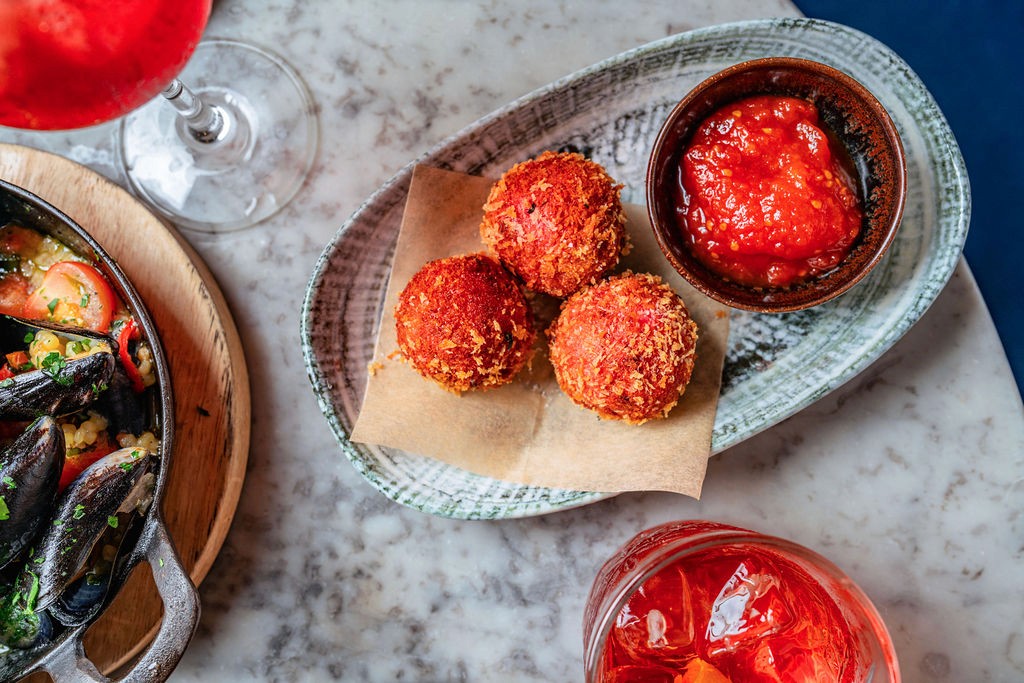
Beetroot and goat's cheese arancini with tomato jam
Arancini come from Sicily, and they may be the most quintessentially Sicilian dish on this menu. The name means "little oranges", a reference to the shape and the golden colour they take on once fried. Most historians trace them back to the Arab occupation of Sicily in the ninth and tenth centuries, when rice cultivation first arrived on the island. Traditionally, they're stuffed with meat ragù or mozzarella, but our version takes a modern turn - beetroot for colour and sweetness, soft goat's cheese in the centre, all wrapped in golden rice and deep-fried.
Burrata with confit plum tomatoes, rocket and mustard dressing
Burrata's a relatively young cheese by Italian standards. It was created in Puglia in the early to mid twentieth century, on a dairy farm in Andria, as a way to use up scraps of leftover mozzarella. The mozzarella is stretched into a pouch and filled with cream and small shreds of fresh mozzarella - stracciatella - to make a soft, pourable cheese that runs rather than slices. We serve it with confit plum tomatoes (slow-cooked in olive oil to concentrate their sweetness), rocket, and a mustard dressing for some sharpness.
Aubergine parmigiana
Parmigiana di melanzane is one of those Italian dishes that two regions still argue about. Sicily and Campania both claim it, and the truth probably lies somewhere between them. It likely originated in Sicily, where the word "parmiciana" refers to the layered wooden slats of a window shutter (the dish stacks its aubergine similarly). Both regions cook it in their own way - Sicilians use caciocavallo cheese, Neapolitans use mozzarella. Ours is the Neapolitan style: slow-cooked layers of aubergine, mozzarella, slow-cooked tomato sauce and parmesan, baked until everything melts into everything else.
Tempura courgette flower filled with ricotta, truffle paste and a honey drizzle
Fried courgette flowers, fiori di zucca fritti, are a Roman summer classic. The flowers grow at the end of courgette plants, and Italians have been deep-frying them for as long as anyone can remember. The traditional Roman filling is mozzarella and an anchovy, fried in a thin batter and served crisp from the pan. Our version goes further upmarket - ricotta, truffle paste, and a drizzle of honey to balance the salt of the cheese. The tempura naming is a nod to the lighter, crispier Japanese batter style.
Roasted Portobello mushroom, aubergine, sundried tomato, balsamic reduction
It's the most modern plate in this section. Portobello mushrooms are a New World ingredient, technically a mature variety of the cremini mushroom that became popular in American restaurants in the 1980s before crossing back over the Atlantic. We pair them with aubergine and sundried tomato - both very much Italian - and a balsamic reduction that takes the sweetness of Modena's vinegar and concentrates it further. It's a more contemporary plate than most on this menu, but the flavours are firmly Italian.
From the sea
Italy has eight thousand kilometres of coastline, and Italian seafood cooking is as varied as the regions it comes from - North African influences in Sicily and Sardinia, French ones in Liguria, Adriatic traditions on the east coast. Three plates on our menu sit firmly in seafood territory.
Pan-fried tiger prawns with shellfish and brandy sauce
It's a restaurant classic rather than a regional dish. Gamberoni alla griglia (grilled prawns) and prawns in various preparations appear on Italian menus across the country, but the flambé technique with brandy or cognac is a borrowing from French haute cuisine that found its way into northern Italian restaurant kitchens in the twentieth century. The shellfish stock that deepens the sauce comes from the traditional Italian way of making sure nothing is wasted - prawn heads and shells simmered down for flavour.
Fresh mussels with fregola and cherry tomatoes, in a white wine sauce
Fregola is a Sardinian pasta - small toasted balls of semolina that look a little like couscous, which makes sense, because they're thought to share North African roots. Sardinia's history of trade with Tunisia and the wider Arab Mediterranean shaped a lot of its cooking, and fregola is one of the clearer examples. Unlike most pastas, it's toasted before cooking, which gives it a nutty flavour and lets it hold up well in seafood broths. Paired with fresh mussels, cherry tomatoes and white wine, it makes for one of the more soulful starters on the menu.
Crunchy fried squid and zucchini with an aioli and sweet chilli sauce
Calamari fritti is a coastal classic across Italy, served in every region with a seaside. The technique is uncomplicated - squid rings dipped in seasoned flour and dropped into hot oil until crisp - but the success of the dish depends on the freshness of the squid and the precision of the frying time, since chewy, overcooked squid is one of the most common Italian kitchen mistakes. We pair ours with strips of zucchini for extra crunch, an aioli (Provençal in origin but very much at home in Italian seafood cooking), and a sweet chilli sauce for a touch of heat.
Cured meats and cheese
The Italian charcuterie tradition runs deep. Most regions have at least one cured meat they're famous for - prosciutto from Parma and San Daniele, bresaola from Valtellina, finocchiona from Tuscany, 'nduja from Calabria, mortadella from Bologna. Antipasti is where they all show up, often arranged on a wooden board with cheese, olives and pickles. Two plates on our menu work this territory.
Carpaccio of bresaola, rocket, shaved parmesan and truffle oil
Carpaccio has a specific origin story. It was invented in Venice in 1950 at Harry's Bar, when chef Giuseppe Cipriani created the dish for a regular customer, the Countess Amalia Nani Mocenigo, whose doctor had told her to avoid cooked meat. The original version was raw beef, sliced wafer-thin, dressed with mustard mayonnaise. The dish took its name from Vittore Carpaccio, the Venetian Renaissance painter known for his use of vivid reds. Our version uses bresaola - air-dried, salt-cured beef from Valtellina in Lombardy, where the cold alpine air does the curing work. It's served with peppery rocket, shaved parmesan and a drizzle of truffle oil.
Italian antipasto, selection of cured Italian meats and cheese
This is the antipasto board - the dish that gives the whole course its name. Antipasto literally means "before the meal", and the concept dates back to Roman dining, when the gustatio course opened a banquet with small plates of olives, eggs, fish and cured meats. The tradition narrowed and broadened through the medieval and Renaissance periods, eventually settling into its current form: a shared board with a few slices of regional charcuterie, hunks of cheese, olives, pickles and bread. Our selection draws on classic Italian producers - prosciutto, salami, regional cheeses, olives and bread. It's a starter built for sharing.
How to choose
Fourteen plates are a lot to pick from. If you're not sure where to begin, a board of antipasto for the table is the easiest entry point. If you want something lighter, the burrata or the bruschetta will do the job. If you've come hungry, the prawns or the mussels carry plenty of weight.
And as always - if you're stuck, ask. The staff will happily walk you through the menu and pull together a starter spread that suits the table.
Walk in or reserve a table, and we'll see you soon.
Book a table | See the full menu
Have a read of our story, look at our wine list, or see what else is on our blog.